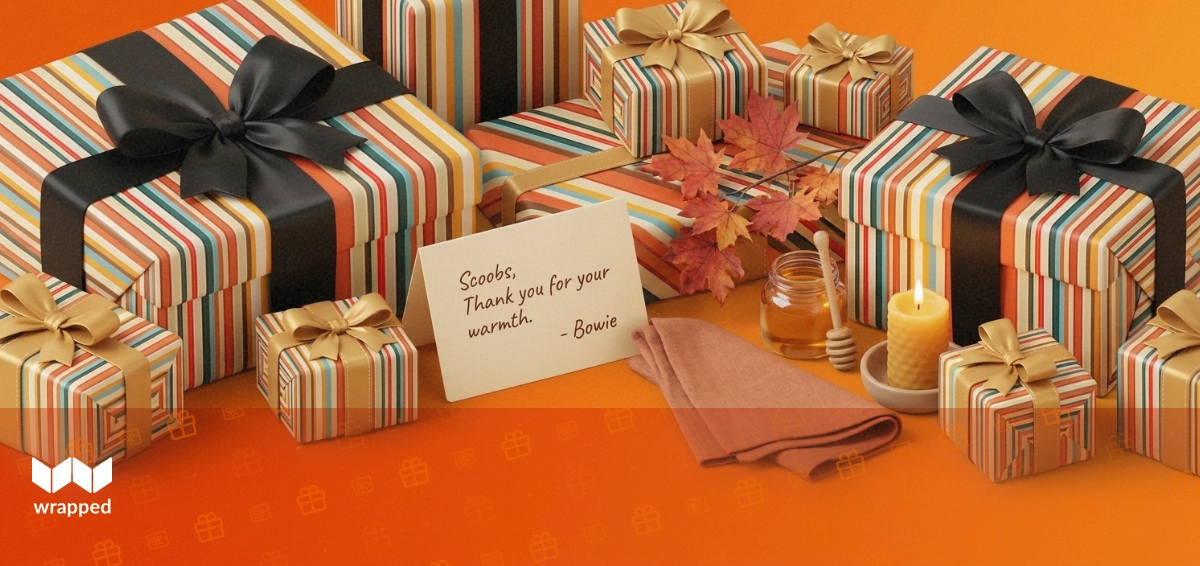
Gifting this week depended almost entirely on where the parcel started. In Britain, birthdays took 62% of everything sent: cake, candles, flowers and cards, week after week. In Canada, birthdays barely reached a third, and the rest of the week went to get-well parcels, thank-you gifts and notes of comfort.
That is the thing worth noticing about cross-border gifting. The products look similar everywhere. The reasons do not.
Two of every three British gifts this week were for a birthday.
A quarter of gifting had no occasion at all
Behind birthdays sat something less obvious and arguably more interesting. Gifts with no occasion attached made up 27% of the week worldwide, and they held that position in every major market. Parents sent bracelets to grown children across long distances. Friends sent a mug, a book, a bouquet, with a note that mostly says I was thinking about you.
These gifts do not spike and they do not fade. They arrive on a Tuesday because someone remembered someone. For merchants, that matters more than any seasonal peak, because it means gifting demand never actually switches off between holidays.
Australia is the market watching the calendar
One country broke the pattern in the other direction. Seasonal gifting in Australia climbed to 21% of the week, well ahead of every other big market, as shoppers packed coffee, wine and watch straps for Father's Day on September 6. Australian and New Zealand shoppers rarely wait for the week of the date; they buy when they think of it.
Elsewhere the international picture stayed broad. Just over half of this week's gifting came from outside the United States, and gift notes arrived in Spanish, Turkish, French, Arabic, Dutch and Swedish. Jewelry counters and food and drink shops each took a fifth of all gifting, sending bracelets, necklaces, wine and bouquets in roughly equal measure.
What this means for merchants
If a store ships internationally, its gifting mix is not one habit but several. A British shopper is likely buying for a birthday. A Canadian shopper may be sending comfort. An Australian shopper is already thinking about a date three weeks out. The safest response is to make gifting available all the time, on every product, rather than building it around one seasonal campaign.
The second response is language. When gift options and message fields appear in a shopper's own language, the gift stops feeling like an export and starts feeling like a present. That is a small change with an outsized effect on the moment someone decides to add a note.
This week in gifting
62% of British gifting was for birthdays 27% of gifts had no occasion attached 21% of Australian gifting was seasonal ahead of Father's Day 57% of gifting crossed a border 36% of gifting came from family members 12% of American gifting said thank you